TrustQuant is an AI-powered Cyber-Financial Resilience Rating platform that quantifies trust, assesses risk, and transforms complex infrastructure data into confident decisions for UK SMEs, partners, and ecosystems.
UK SMEs face £3.4 billion in annual cyber losses. TrustQuant turns complex technical infrastructure evidence into clear, financially interpretable cyber-resilience ratings unlocking better financing, lower insurance premiums, and commercial trust.
TrustQuant links cloud APIs, Linux server telemetry, and credential access logs into one closed-loop resilience platform quantifying cyber risk before it erodes trust, not after.

Trust QuantificationAI models that measure trust across people, partners and ecosystems producing a standardised Digital Resilience Rating from 0 to 100.

Risk AnalyticsDetect hidden risks and anomalies with predictive intelligence identifying configuration drift before it becomes a breach or a financial loss event.

Relationship IntelligenceMap connections, patterns and influence across ecosystems giving enterprise procurement teams quantifiable, evidence-backed supplier-risk outputs.
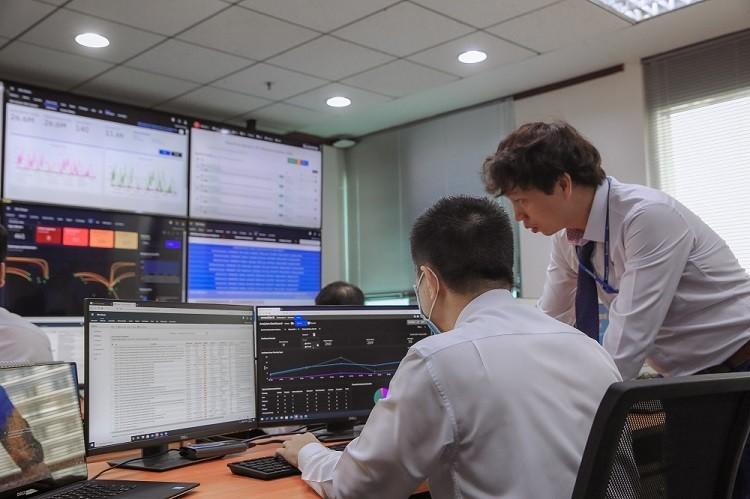
Real-Time InsightsActionable dashboards for faster and smarter decisions translating technical security indicators into credit risk parameters commercial lenders and insurers require.

Secure & ScalableBuilt on enterprise-grade security with cloud scalability the Agentless Metadata Extraction Protocol (AMEP) extracts data without intrusive agent software.

SME Trust PassportA continuously refreshed, cryptographically verifiable digital asset enabling SMEs to instantly share their security posture with banks, insurers, and corporate buyers.
Our AI models predict cyber-financial risk before a breach destroys working capital, instead of recording losses after the incident occurs.
Models trained on British SME cloud configurations, UK cyber governance frameworks, and regional threat vectors hyper-localised for the British market.
Capture each SME's unique infrastructure behaviour as a permanent, defensible digital asset that continuously improves with new data.
Tiered SaaS pricing from just £50/month gives independent businesses enterprise-grade cyber-financial rating intelligence they can actually afford.
Zero host-based agent installations required. Secure read-only cloud connection in under 10 minutes no disruption to daily operations.
Reduces UK SME cloud energy waste 20–30% per node and protects the livelihoods of 16 million workers employed in the UK SME private sector.
TrustQuant is an AI-powered decision-intelligence and automated cyber-financial resilience platform for the UK professional, financial and digital services industry. We solve the trust-to-credit gap where SMEs suffer massive cyber losses but lack the verified digital evidence to unlock better financing, lower insurance premiums, and enterprise supply chain access.
TrustQuant helps UK SMEs quantify, prove and continuously optimise their digital security posture by translating complex technical infrastructure evidence into clear, financially interpretable cyber-resilience ratings helping operators unlock better financing, secure lower insurance premiums and foster commercial trust.
To be the most trusted and used platform for cyber-financial resilience rating in the UK and globally a future where every SME can prove its digital trustworthiness instantly, unlocking fairer credit, lower premiums, and access to enterprise supply chains without needing a dedicated security team.
Continuous refinement of the TrustQuant Resilience Rating and cyber-to-lending translation models to stay ahead of evolving cloud vulnerabilities and host-based Linux risk vectors.
A commitment to evidence-backed, forensic data integrity and the elimination of self-attested static survey biases in cybersecurity assessments.
Empowering SMEs to own, verify, and share their verified digital resilience rating as a proprietary business asset to unlock competitive financial opportunities.
Making complex, enterprise-grade cloud security and host-hardening audits accessible through intuitive, low-friction, and non-invasive automated interfaces.
Equipping SME founders with the clear cyber-financial foresight needed to secure premium credit terms, lower insurance premiums, and prove supplier trust without cyber-security expertise.
Reducing UK SME cloud carbon footprint, protecting SME livelihoods, and supporting the UK government's national cyber resilience agenda and Net Zero digital strategy.
Chaitanya holds an MSc in Cybersecurity with Merit from the University of Hertfordshire. His dissertation, "Hybrid Cryptographic Model for Securing Cloud Data using TwoFish and RSA", demonstrates his capability to architect secure, enterprise-grade cloud data protection models. He brings deep expertise in AI threat modelling, host-based Linux system hardening, and secure API integrations leading the design of TrustQuant's agentless scanning engine and Cyber-to-Lending Risk Translation Layer (CLRTL).
Laxman holds an MSc in Management with Extended Professional Practice from Coventry University, backed by professional experience as a financial intern and operations manager. His hands-on background in corporate balance sheet analysis, SQL database operations, and operational workflow management allows TrustQuant to algorithmically map security indicators into credit metrics, ensuring the platform delivers commercially viable outputs that SME operators and enterprise underwriters trust equally.
Chaitanya has worked directly with live cloud networks and server infrastructure, witnessing firsthand how configuration drift and unpatched vulnerabilities lead to operational downtime. Laxman has worked with corporate balance sheets, understanding how a single digital interruption can destroy working capital. Together they translate technical posture directly into financial capital parameters.
A unified, closed-loop decision-intelligence platform that converts fragmented cloud API data, Linux server telemetry, and credential access logs into verified financial trust ratings. TrustQuant transforms technical infrastructure evidence from a compliance burden into a precise driver of commercial opportunity.
High-volume online retailers securing their cloud environments and proving digital trustworthiness to enterprise supply chains and cyber insurers.
Legal, accounting and consulting firms translating their technical posture into verified compliance evidence for client onboarding and regulatory audits.
Cloud-hosted tech startups demonstrating infrastructure maturity to enterprise procurement teams and securing access to working capital loans.
Logistics suppliers proving their digital resilience to enterprise buyers demanding strict third-party risk validation across Scope 3 supply chains.
Healthcare providers securing patient data environments and maintaining continuous compliance with UK GDPR and NHS digital security standards.
Financial services companies and MSPs managing third-party vendor risk portfolios with quantifiable, evidence-backed digital trust ratings.
A London and South-East focused pilot programme trains the first UK-specific machine learning models on SME cloud configurations, Linux system telemetry, identity access profiles, and administrative privilege logs consistent with NCSC Cyber Essentials v3.3 guidelines.
Co-founders Chaitanya Nagabhairu and Laxman Rao Yennamaneni lead paid pilots at 5–10 UK SME locations, integrating agentless API connectors and Linux inspection scripts to build the first Digital Resilience Fingerprints and validate the CLRTL risk translation logic.
The TrustQuant Resilience Rating scales to 50–100 SME client nodes across Manchester, Birmingham, and South-West tech hubs, with plug-and-play API connectivity to UK commercial lending portals, credit scoring bureaus, and major MSP systems (ConnectWise, Autotask).
SME Configuration Drift Autocalibration (CDAP) models self-calibrate their rating outputs based on real UK SME drift behaviours, and the Trust Passport generation becomes fully automated, reducing compliance processing from months to minutes.
The Community Cyber-Intelligence Registry (CCIR) goes live with federated machine learning, sharing anonymised UK risk trends across SMEs by industry sector, region, and company size creating powerful network effects no competitor can easily replicate.
The platform expands to North England, Scotland, Wales, and Northern Ireland, then launches early EU pilots in Germany, France, and the Nordic tech hubs, aligning with the EU NIS2 Directive scaling toward 500+ enterprise nodes globally through cloud-native, modular SaaS architecture.
Average reduction in high-risk technical vulnerabilities across the 5 UK SME pilot locations over 8 weeks.
Cloud-heavy startups achieved 40% risk reduction funded directly by identified cloud-cost savings through the Remediation Funding Logic.
User satisfaction rating for underwriting and lending use cases, and 4.0/5 for ease of integration across pilot SME operators.
Actionable financial risk translation delivered immediately after automated evidence ingestion no waiting weeks for a manual compliance report.
Three independent professional service SMEs and two regional cloud advisory firms submitted non-binding Letters of Intent after post-pilot product demonstrations.
81% of 150 UK SMEs, MSPs and cyber-insurance brokers surveyed reported being highly interested in automated cyber-financial resilience scoring.
The global cyber risk quantification market was valued at USD 3.20 billion in 2024 and is projected to grow at 16.1% through 2034. The UK leads European adoption with a domestic SME cybersecurity software market of approximately £315 million in 2024 and a CAGR of 18.5% to 2033 driven by the UK Cyber Security and Resilience Bill and EU NIS2 Directive.
% of respondents identifying as critical operational challenge
% of respondents rating as highly valuable (177 validated responses)
Capability comparison across key dimensions
USD Billions, 2024–2034 (Projected)
| Capability | BitSight Technologies | SecurityScorecard | Experian / D&B | TrustQuant |
|---|---|---|---|---|
| Internal cloud & Linux infrastructure visibility | ✗ External only | ✗ External only | ✗ None | ✓ |
| Cyber-to-lending credit risk translation | ✗ | ✗ | Financial only | ✓ |
| Agentless, non-invasive integration | Passive scan | Passive scan | ✗ | ✓ |
| SME-affordable pricing | ✗ Enterprise-only | ✗ Enterprise-only | Variable | ✓ From £50/mo |
| Reusable Trust Passport for lenders & insurers | ✗ | ✗ | ✗ | ✓ |
| FinOps remediation funding logic | ✗ | ✗ | ✗ | ✓ |
| UK-trained ML models, NCSC-aligned | Generic global | Generic global | ✗ | ✓ |
From single-site resilience tracking to multi-cloud enterprise governance pricing built for the UK SME digital economy where every pound of subscription cost is offset by insurance premium savings and improved credit access.
Non-invasive cloud metadata assessment, fundamental resilience dashboard, and standard compliance PDF for small startups.
Advanced predictive cyber-financial risk translation, active configuration drift alerts, and full host-based Linux server telemetry for growing SMEs and MSPs.
Dedicated multi-cloud connector setup, verifiable Trust Passport PDF exports, automated ESG compliance reporting, and CCIR access for lenders and underwriters.
Secure Connector Setup from £600 one-time · Professional Consulting from £500 · Premium Reports £200–£500/year
Whether you're a single-site SME or a multi-cloud enterprise, our team will walk you through how TrustQuant transforms your infrastructure evidence into verified financial trust intelligence.